For emotionally intelligent women who understand their patterns perfectly and repeat them anyway...
The 200-Year-Old Psychological Technology Re-Discovered for Self-Aware Women in 2026
How a simple $7 pamphlet is out-performing years of therapy, attachment theory books, and "heal your wounds" programs for women who know exactly what they're doing—while they're doing it.
For emotionally intelligent women who understand their patterns perfectly and repeat them anyway...
The 200-Year-Old Psychological Technology Re-Discovered for Self-Aware Women in 2026
How a simple $7 pamphlet can out-perform years of therapy, attachment theory books, and "heal your wounds" programs for women who know exactly what they're doing—while they're doing it.
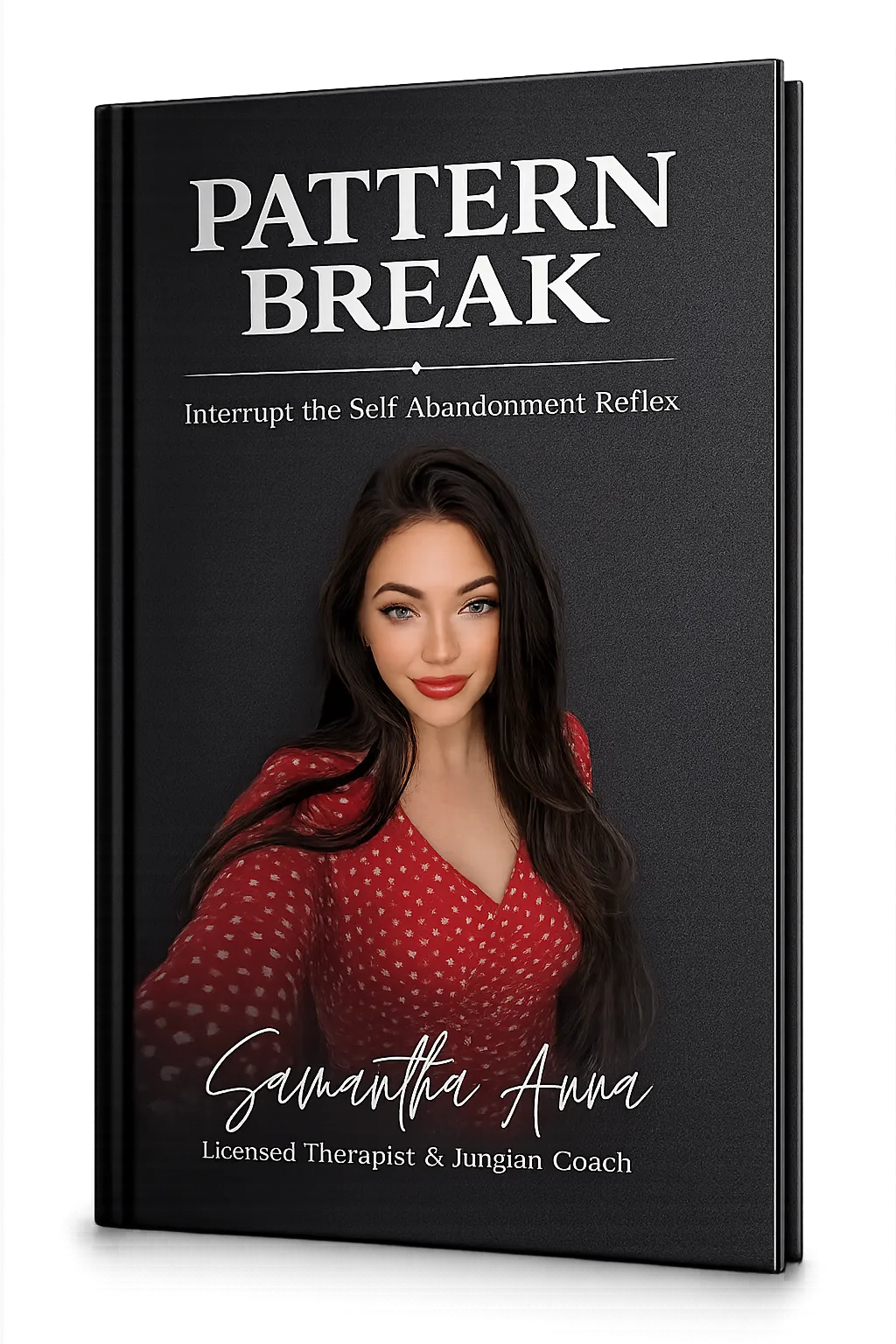
The Forgotten Tool That Changed Minds
Long before "self-help" was a phrase, before therapy apps, before attachment style quizzes… there was the pamphlet.
Benjamin Franklin sold them.
Thomas Paine used them to shift consciousness. Thinkers used them to install new ways of seeing when print was the only medium.
It was the first scalable psychological intervention. Cheap to produce, easy to distribute, and impossible to ignore when the insight was right.
And here's the part most people miss…
Pamphlets didn't just explain. They interrupted. They moved readers from unconscious pattern to conscious choice, from automatic reflex to deliberate response, from insight to integration.
That same mechanic still works today, if you know how to modernize it.
The Forgotten Tool That Changed Minds
Long before "self-help" was a phrase, before therapy apps, before attachment style quizzes… there was the pamphlet.
Benjamin Franklin sold them. Thomas Paine used them to shift consciousness. Thinkers used them to install new ways of seeing when print was the only medium.
It was the first scalable psychological intervention. Cheap to produce, easy to distribute, and impossible to ignore when the insight was right.
And here's the part most people miss…
Pamphlets didn't just explain. They interrupted. They moved readers from unconscious pattern to conscious choice, from automatic reflex to deliberate response, from insight to integration.
That same mechanic still works today, if you know how to modernize it.

Hi, I'm Samantha Jarvis, LCPC
Over the last decade, I've sat across from emotionally intelligent women who understand their patterns perfectly—and repeat them anyway.
Women who:
Can articulate their attachment style with clinical precision
Have done years of deep therapeutic work
Know exactly what they're doing while they're doing it
Still chase when he pulls away—every single time
I've seen the pattern hundreds of times.
The distance appears. The body tightens. The thoughts spiral. The hand reaches for the phone.
They know it's happening.
They know it won't help.
They do it anyway.
Not because they're broken.
Because the pattern doesn't live where they've been looking.
Lean in, because what I'm about to tell you is important.
This pattern isn't in your beliefs.
It's in your unconscious.
For years, you've been trying to solve this with:
More therapy (insight after the fact)
Better boundaries (rules you can't maintain under pressure)
Attachment theory (understanding without interruption)
Self-love practices (soothing without structural change)
You gained clarity.
You understood the pattern.
You could explain it beautifully.
But understanding didn't stop it from taking over.
Then it happened again.
And again.
From the outside looking in, you look self-aware.
You can name your childhood patterns.
You understand anxious attachment.
You've read the books.
But the reality isn't quite so clean.
You know what you're doing while you're doing it—and you can't stop.
When he goes quiet, something in your body moves faster than your mind.
Before you think.
Before you choose.
Before consciousness even enters.
Your unconscious steps in to protect attachment.
And you chase.
This isn't a character flaw.
This is a patterned reflex.
And patterned reflexes don't resolve through insight.
Hi, I'm Samantha Jarvis, LCPC
Over the last decade, I've sat across from emotionally intelligent women who understand their patterns perfectly—and repeat them anyway.
Women who:
Can articulate their attachment style with clinical precision
Have done years of deep therapeutic work
Know exactly what they're doing while they're doing it
Still chase when he pulls away—every single time
I've seen the pattern hundreds of times.
The distance appears. The body tightens. The thoughts spiral. The hand reaches for the phone.
They know it's happening.
They know it won't help.
They do it anyway.
Not because they're broken.
Because the pattern doesn't live where they've been looking.
Lean in, because what I'm about to tell you is important.
This pattern isn't in your beliefs.
It's in your unconscious.
For years, you've been trying to solve this with:
More therapy (insight after the fact)
Better boundaries (rules you can't maintain under pressure)
Attachment theory (understanding without interruption)
Self-love practices (soothing without structural change)
You gained clarity.
You understood the pattern.
You could explain it beautifully.
But understanding didn't stop it from taking over.
Then it happened again.
And again.
From the outside looking in, you look self-aware.
You can name your childhood patterns.
You understand anxious attachment.
You've read the books.
But the reality isn't quite so clean.
You know what you're doing while you're doing it—and you can't stop.
When he goes quiet, something in your body moves faster than your mind.
Before you think.
Before you choose.
Before consciousness even enters.
Your unconscious steps in to protect attachment.
And you chase.
This isn't a character flaw.
This is a patterned reflex.
And patterned reflexes don't resolve through insight.
Stop understanding. Start interrupting.
Most emotionally intelligent women try to fix this pattern with:
More therapy sessions (processing after the collapse)
Better self-talk (reasoning with a part that doesn't use words)
Willpower ("just don't text him")
Dating breaks (feeling regulated alone, unraveling in connection)
None of these work because they're aimed at the wrong level.
The pattern doesn't execute in your conscious mind.
It executes in your unconscious.
By the time you're explaining, negotiating, or justifying—the unconscious has already decided.
The law: Interrupt the reflex before it runs
Platforms evolve. The way unconscious patterns resolve has not.
The real question is the same it's been for 200 years:
"How do I stay conscious in the moment my unconscious wants to take over?"

Benjamin Franklin answered it with pamphlets. He interrupted old patterns with new frameworks.
People consumed them. Consciousness shifted. Behavior followed.
I used the same law, modernized, to build Pattern Break —a depth-based interruption system that meets the Self-Abandonment Reflex in real time so emotionally intelligent women can stop abandoning themselves when love feels at risk.

Why it works:
Women recognize the exact moment (the 3-second window between trigger and response)
They interrupt the reflex (pause → witness → stay → trust)
The unconscious updates through repetition (not through insight, but through lived experience)
That's why I built this pamphlet: to give emotionally intelligent women the interruption tool therapy never provided.
Stop understanding. Start interrupting.
Most emotionally intelligent women try to fix this pattern with:
More therapy sessions (processing after the collapse)
Better self-talk (reasoning with a part that doesn't use words)
Willpower ("just don't text him")
Dating breaks (feeling regulated alone, unraveling in connection)
None of these work because they're aimed at the wrong level.
The pattern doesn't execute in your conscious mind.
It executes in your unconscious.
By the time you're explaining, negotiating, or justifying—the unconscious has already decided.
The law: Interrupt the reflex before it runs.
Platforms evolve. The way unconscious patterns resolve has not.
The real question is the same it's been for 200 years:
"How do I stay conscious in the moment my unconscious wants to take over?"
Benjamin Franklin answered it with pamphlets. He interrupted old patterns with new frameworks.
People consumed them. Consciousness shifted. Behavior followed.
I used the same law, modernized, to build Pattern Break —a depth-based interruption system that meets the Self-Abandonment Reflex in real time so emotionally intelligent women can stop abandoning themselves when love feels at risk.
Why it works:
Women recognize the exact moment (the 3-second window between trigger and response)
They interrupt the reflex (pause → witness → stay → trust)
The unconscious updates through repetition (not through insight, but through lived experience)
That's why I built this pamphlet: to give emotionally intelligent women the interruption tool therapy never provided.
Before we move forward...
This is FOR you if:
You've done therapy and understand your patterns
You can name your attachment style
You've read the books and still repeat the pattern
You're emotionally intelligent and self-aware
You're tired of knowing better but not choosing differently
You know exactly what you're doing while you're doing it—and you do it anyway
You're ready to interrupt the reflex, not just understand it
This is NOT for you if:
You're looking for dating strategy or "how to get him back"
You want someone to tell you the pattern is fine
You're not willing to feel discomfort
You need more insight before you're ready to change
You think understanding alone will shift the pattern
You're looking for a quick fix or weekend breakthrough
If you see yourself here, keep reading. If not, save your $7.
Before we move forward...
This is FOR you if:
You've done therapy and understand your patterns
You can name your attachment style
You've read the books and still repeat the pattern
You're emotionally intelligent and self-aware
You're tired of knowing better but not choosing differently
You know exactly what you're doing while you're doing it—and you do it anyway
You're ready to interrupt the reflex, not just understand it
This is NOT for you if:
You're looking for dating strategy or "how to get him back"
You want someone to tell you the pattern is fine
You're not willing to feel discomfort
You need more insight before you're ready to change
You think understanding alone will shift the pattern
You're looking for a quick fix or weekend breakthrough
If you see yourself here, keep reading. If not, save your $7.
Why Most Emotionally Intelligent Women Miss This Completely
If you lined up 100 self-aware women and asked how they're handling their relationship patterns,
you'd hear the same thing:
"I'm working on my attachment style"
"I'm healing my inner child"
"I'm learning to love myself first"
"I'm processing my childhood wounds"
That's the default playbook. Everyone runs it. Everyone looks identical.
The truth is, most therapeutic approaches are designed backwards.
They start with what you want (understanding, healing, insight) instead of what you need (interruption in the moment the reflex fires).
That's why therapy creates clarity without change.
That's why you can explain the pattern beautifully—and still repeat it.
That's why insight feels powerful in session—and powerless at 2am when he hasn't texted back.
When you flip the sequence—when you interrupt the reflex in real time—everything changes.
The urge still appears.
But it no longer owns you.
And suddenly, you're not just understanding the pattern… you're ending it.
Why Most Emotionally Intelligent Women Miss This Completely
If you lined up 100 self-aware women and asked how they're handling their relationship patterns, you'd hear the same thing:
"I'm working on my attachment style"
"I'm healing my inner child"
"I'm learning to love myself first"
"I'm processing my childhood wounds"
That's the default playbook. Everyone runs it. Everyone looks identical.
The truth is, most therapeutic approaches are designed backwards.
They start with what you want (understanding, healing, insight) instead of what you need (interruption in the moment the reflex fires).
That's why therapy creates clarity without change.
That's why you can explain the pattern beautifully—and still repeat it.
That's why insight feels powerful in session—and powerless at 2am when he hasn't texted back.
When you flip the sequence—when you interrupt the reflex in real time—everything changes.
The urge still appears.
But it no longer owns you.
And suddenly, you're not just understanding the pattern… you're ending it.
What Happens If You Ignore This?
You'll keep chasing when he pulls away.
You'll keep abandoning yourself to preserve connection.
You'll keep feeling the shame of knowing better but not choosing differently.
In as little as six months, the gap between you and women who learned to interrupt this reflex will be too wide to close.
If you've been repeating this pattern long enough, you've seen it: good women stay stuck in the same cycle for years because they never learned where the pattern actually lives.
Meanwhile, the ones who interrupt early build self-trust, inner authority, and relational stability while you're still explaining why you texted him again.
There's no neutral ground here.
You're either interrupting the reflex—or repeating it.
What Happens If You Ignore This?
You'll keep chasing when he pulls away.
You'll keep abandoning yourself to preserve connection.
You'll keep feeling the shame of knowing better but not choosing differently.
In as little as six months, the gap between you and women who learned to interrupt this reflex will be too wide to close.
If you've been repeating this pattern long enough, you've seen it: good women stay stuck in the same cycle for years because they never learned where the pattern actually lives.
Meanwhile, the ones who interrupt early build
self-trust, inner authority, and relational stability while you're still explaining why you texted him again.
There's no neutral ground here.
You're either interrupting the reflex—or repeating it.
The $7 Pamphlet That Interrupts the Self-Abandonment Reflex
Pattern Break is the depth-based interruption system I built for emotionally intelligent women who are done understanding and ready to change.
What is it? A stripped-down psychological framework built on a single idea: if you interrupt the reflex in the moment it fires, the unconscious updates through experience—not explanation.
Instead of processing after the collapse, you stay conscious during the trigger.
Instead of waiting to "feel healed," you meet the pattern while it's active.
Instead of repeating, you interrupt—once, then again, then again—until staying becomes natural.
The framework is broken into six sections so you can understand it fast, recognize yourself immediately, and know exactly what to interrupt:
Section 1: Where the Pattern Was Actually Located
Understand why insight failed—and where the Self-Abandonment Reflex actually lives (not in your beliefs, but in your unconscious).
Section 2: Insight Fails—Change Happens When We Make the Unconscious Conscious
Learn why emotionally intelligent women are the most vulnerable to this pattern—and why top-down tools (therapy, boundaries, self-talk) can't interrupt a bottom-up reflex.
Section 3: Waiting Preserves the Pattern
Discover why "working on yourself alone" doesn't integrate the pattern—and why pressure (not readiness) is where change actually happens.
Interlude: What Actually Takes Over When Love Feels At Risk
Meet the shadow responses that hijack your choices:
The fear of being alone
The urge to overgive
The anger you've learned to hide
The hope that clings to potential
Section 4: Pattern Break—The Work That Ends the Cycle
The exact interruption sequence that rewrites the pattern:
Urge → Pause → Witness → Stay → Trust
Plus: The Post-Athletic Order Reset (one-page tool you'll reference daily)
Section 5: What Changes Through This Work
The four phases of integration:
Seeing the pattern (recognition)
Holding yourself (staying conscious under pressure)
Choosing differently (real-time authority)
A new way of being (the reflex loses power)
Section 6: You Are At A Threshold
How to move from this pamphlet into intensive 1:1 depth work (if you're ready for full integration with real-time support).
By the time you're done, you won't just understand why you chase.
You'll know the exact moment to interrupt—and how to stay conscious when your unconscious wants to take over.
Stop explaining the pattern after it happens. Interrupt it in real time—and watch $7 turn into the foundation for self-trust you've been trying to build for years.
Emotionally intelligent women have paid thousands for therapy that created insight without interruption.
But for a limited time, I'm setting the price of all of this to just...
$7
The $7 Pamphlet That Interrupts the Self-Abandonment Reflex
Pattern Break is the depth-based interruption system I built for emotionally intelligent women who are done understanding and ready to change.
What is it? A stripped-down psychological framework built on a single idea: if you interrupt the reflex in the moment it fires, the unconscious updates through experience—not explanation.
Instead of processing after the collapse, you stay conscious during the trigger.
Instead of waiting to "feel healed," you meet the pattern while it's active.
Instead of repeating, you interrupt—once, then again, then again—until staying becomes natural.
The framework is broken into six sections so you can understand it fast, recognize yourself immediately, and know exactly what to interrupt:
Section 1: Where the Pattern Was Actually Located
Understand why insight failed—and where the Self-Abandonment Reflex actually lives (not in your beliefs, but in your unconscious).
Section 2: Insight Fails—Change Happens When We Make the Unconscious Conscious
Learn why emotionally intelligent women are the most vulnerable to this pattern—and why top-down tools (therapy, boundaries, self-talk) can't interrupt a bottom-up reflex.
Section 3: Waiting Preserves the Pattern
Discover why "working on yourself alone" doesn't integrate the pattern—and why pressure (not readiness) is where change actually happens.
Interlude: What Actually Takes Over When Love Feels At Risk
Meet the shadow responses that hijack your choices:
The fear of being alone
The urge to overgive
The anger you've learned to hide
The hope that clings to potential
Section 4: Pattern Break—The Work That Ends the Cycle
The exact interruption sequence that rewrites the pattern:
Urge → Pause → Witness → Stay → Trust
Plus: The Post-Athletic Order Reset (one-page tool you'll reference daily)
Section 5: What Changes Through This Work
The four phases of integration:
Seeing the pattern (recognition)
Holding yourself (staying conscious under pressure)
Choosing differently (real-time authority)
A new way of being (the reflex loses power)
Section 6: You Are At A Threshold
How to move from this pamphlet into intensive 1:1 depth work (if you're ready for full integration with real-time support).
By the time you're done, you won't just understand why you chase.
You'll know the exact moment to interrupt—and how to stay conscious when your unconscious wants to take over.
Stop explaining the pattern after it happens. Interrupt it in real time—and watch $7 turn into the foundation for self-trust you've been trying to build for years.
Emotionally intelligent women have paid thousands for therapy that created insight without interruption.
But for a limited time, I'm setting the price of all of this to just...
$7
The risk isn’t trying. It’s waiting.
Every month you hesitate, two things happen:
The reflex compounds.
Every time you chase, the unconscious learns: "This is how we survive connection."
Self-trust erodes.
Every time you abandon yourself, something inside you stops believing you'll choose differently.
Meanwhile, a few emotionally intelligent women learn to interrupt this reflex.
They don't look "healed"—they look steady.
They feel the urge to chase.
They pause.
They stay.
They don't abandon themselves.
When this shifts from quiet edge to common knowledge, you'll be playing catch-up.
That's the late tax: you arrive after integration and spend years rebuilding what could've been interrupted in weeks.
There’s no middle ground.
You're interrupting the reflex now—or repeating it longer.
The risk isn’t trying. It’s waiting.
Every month you hesitate, two things happen:
The reflex compounds.
Every time you chase, the unconscious learns: "This is how we survive connection."
Self-trust erodes.
Every time you abandon yourself, something inside you stops believing you'll choose differently.
Meanwhile, a few emotionally intelligent women learn to interrupt this reflex.
They don't look "healed"—they look steady.
They feel the urge to chase.
They pause.
They stay.
They don't abandon themselves.
When this shifts from quiet edge to common knowledge, you'll be playing catch-up.
That's the late tax: you arrive after integration and spend years rebuilding what could've been interrupted in weeks.
There’s no middle ground.
You're interrupting the reflex now—or repeating it longer.
The Oldest Play Still Winning
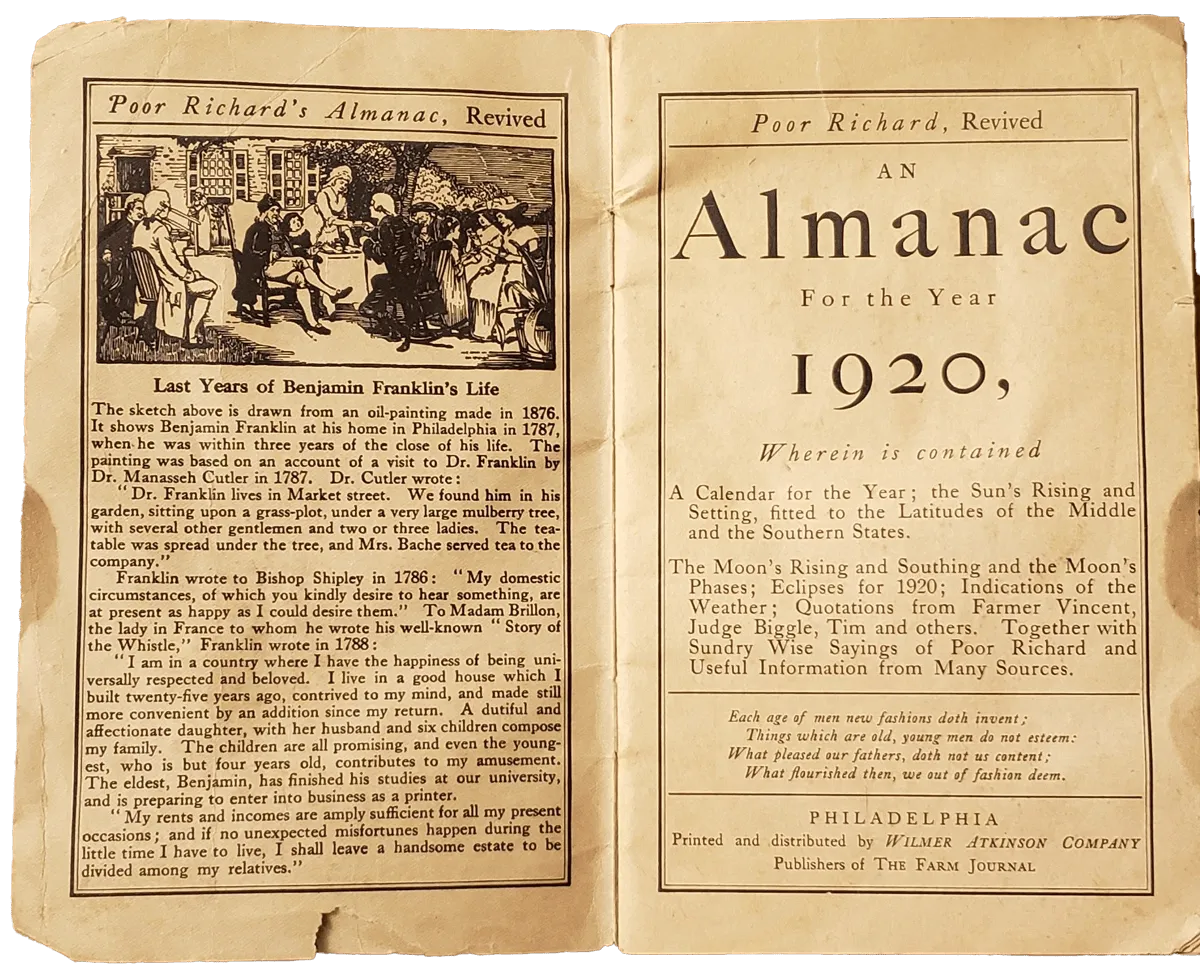
In 1729, Franklin shipped Poor Richard's Almanack : simple, direct, executable.
It spread. Consciousness shifted. Behavior followed.
Today the press is digital. A $7 pamphlet does the same job—tiny paid commitment, pattern interrupted, unconscious updated.
Emotionally intelligent women are using this pamphlet and reporting:
"I saw the urge and didn't act on it—for the first time"
"I stayed with myself when he went quiet"
"I felt the reflex and chose differently"
"I didn't abandon myself"
The winners move first. The rest show up late and repeat longer.
Get Pattern Break Now Before You Repeat Another Cycle
Tap the button below, grab your spot, and interrupt the same reflex that's been running your relationships since before you could name it.
The Oldest Play Still Winning
In 1729, Franklin shipped Poor Richard's Almanack : simple, direct, executable.
It spread. Consciousness shifted. Behavior followed.
Today the press is digital. A $7 pamphlet does the same job—tiny paid commitment, pattern interrupted, unconscious updated.
Emotionally intelligent women are using this pamphlet and reporting:
"I saw the urge and didn't act on it—for the first time"
"I stayed with myself when he went quiet"
"I felt the reflex and chose differently"
"I didn't abandon myself"
The winners move first. The rest show up late and repeat longer.
Get Pattern Break Now Before You Repeat Another Cycle
Tap the button below, grab your spot, and interrupt the same reflex that's been running your relationships since before you could name it.
You may be thinking...
Isn't this just another psychology book?
No. This is interruption training, not insight accumulation. No processing. No "heal your inner child." Just real-time reflex interruption.
Won't $7 buyers be tire-kickers?
No. $7 filters out freebie-seekers. Women who pay—even $7—engage differently than women who download free PDFs.
Does a $7 offer cheapen the depth?
No. Franklin sold pamphlets for $3 in 1729. Price signals accessibility, not value. The depth inside is what counts.
I've already done so much therapy. Why would this work?
Therapy gave you insight. This gives you interruption. They work at different levels. Most women need both.
What if I'm not in a relationship right now?
Perfect. The reflex is easier to interrupt when the stakes are lower. If you've felt the urge in the past months, the pattern is alive.
Will this work if I don't have childhood trauma?
Yes. This pattern isn't about trauma severity—it's about unconscious learning. If you chase when he pulls away, the reflex is installed.
What if I've been repeating this pattern for years?
Doesn't matter. The unconscious updates through experience, not timeline. One real interruption can crack a 20-year pattern.
What about refunds?
60-day guarantee. If you read the pamphlet and don't recognize yourself—or don't see the exact moment to interrupt—email us for a full refund.
You may be thinking...
Isn't this just another psychology book?
No. This is interruption training, not insight accumulation. No processing. No "heal your inner child." Just real-time reflex interruption.
Won't $7 buyers be tire-kickers?
No. $7 filters out freebie-seekers. Women who pay—even $7—engage differently than women who download free PDFs.
Does a $7 offer cheapen the depth?
No. Franklin sold pamphlets for $3 in 1729. Price signals accessibility, not value. The depth inside is what counts.
I've already done so much therapy. Why would this work?
Therapy gave you insight. This gives you interruption. They work at different levels. Most women need both.
What if I'm not in a relationship right now?
Perfect. The reflex is easier to interrupt when the stakes are lower. If you've felt the urge in the past months, the pattern is alive.
Will this work if I don't have childhood trauma?
Yes. This pattern isn't about trauma severity—it's about unconscious learning. If you chase when he pulls away, the reflex is installed.
What if I've been repeating this pattern for years?
Doesn't matter. The unconscious updates through experience, not timeline. One real interruption can crack a 20-year pattern.
What about refunds?
60-day guarantee. If you read the pamphlet and don't recognize yourself—or don't see the exact moment to interrupt—email us for a full refund.
TLDR: Get Pattern Break for only $7
Interrupt the Self-Abandonment Reflex in real time so you stop chasing when he pulls away and start staying with yourself instead.
Inside you'll get instant access to:
The exact moment the pattern takes over (the 3-second window)
The five-step interruption sequence (Urge → Pause → Witness → Stay → Trust)
The shadow responses that hijack your choices (fear, overgive, hidden anger, false hope)
The four phases of integration (from seeing to choosing to embodying)
The depth foundation (Jungian psychology for emotionally intelligent women)
Application details for intensive 1:1 depth work (if you're ready for real-time support during the moments that matter)

60-Day “10× Value” Guarantee
Read the pamphlet. If you don't recognize yourself—or don't see the exact moment to interrupt the reflex—email us within 60 days for a full refund.
No hoops. No questions.
I built this to interrupt the Self-Abandonment Reflex—if it doesn't show you where the pattern lives and how to interrupt it, I insist you get your money back.
TLDR: Get Pattern Break for only $7
Interrupt the Self-Abandonment Reflex in real time so you stop chasing when he pulls away and start staying with yourself instead.
Inside you'll get instant access to:
The exact moment the pattern takes over (the 3-second window)
The five-step interruption sequence (Urge → Pause → Witness → Stay → Trust)
The shadow responses that hijack your choices (fear, overgive, hidden anger, false hope)
The four phases of integration (from seeing to choosing to embodying)
The depth foundation (Jungian psychology for emotionally intelligent women)
Application details for intensive 1:1 depth work (if you're ready for real-time support during the moments that matter)
60-Day “10× Value” Guarantee
Read the pamphlet. If you don't recognize yourself—or don't see the exact moment to interrupt the reflex—email us within 60 days for a full refund.
No hoops. No questions.
I built this to interrupt the Self-Abandonment Reflex—if it doesn't show you where the pattern lives and how to interrupt it, I insist you get your money back.